
CONFIDENCE · AGES 7–12
Bad at-bats are clues, not labels.
A strikeout can feel huge when you are 10. So can a pop-up, a ground ball or a pitch that looks perfect until you miss it. But one result is not a label. It is information.
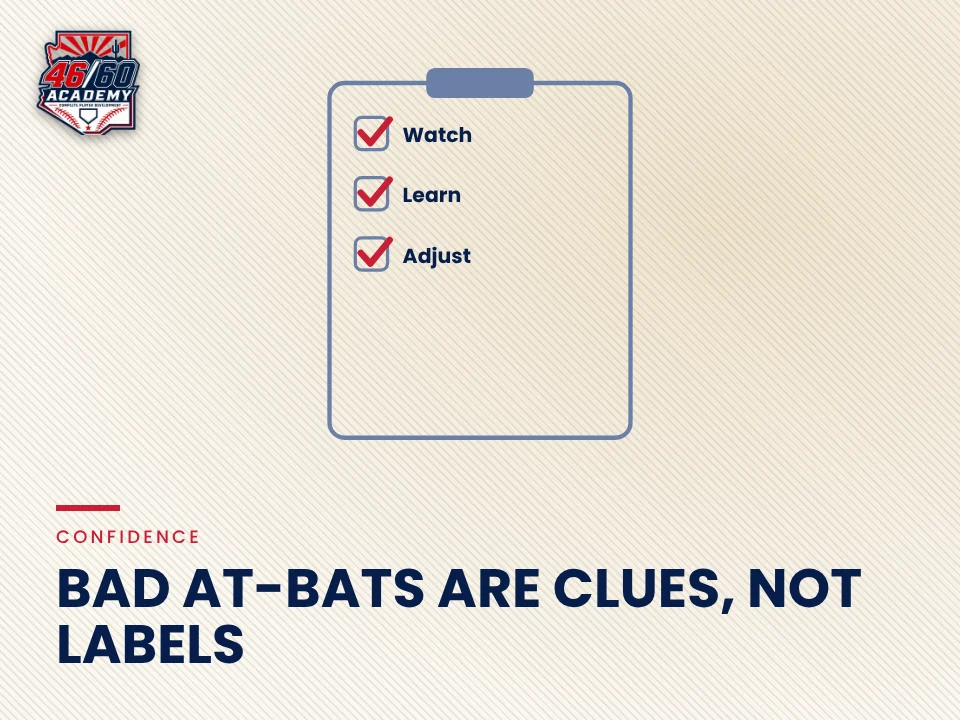
A bad at-bat is information, not a label. After a tough rep, have your player take one breath and name one thing to try next—“see it longer,” “start ready” or “be on time”—so the next pitch has a job.
Train it: 30-Day Mental Approach →“I am a bad hitter” shuts the door. “I was a little late” opens it. The first sentence makes the player small. The second gives them a job for the next pitch.
Use the reset
After a tough rep, take one breath and answer one question: What is one thing I will try next? The answer might be “see it longer,” “start ready,” “swing through it” or “be on time.” Keep it short.
What parents can say
Skip the instant swing lesson in the parking lot. Instead ask, “What did you notice?” If the player has no answer, offer one calm observation—not a full list of corrections.
Practice game
In batting practice, every player earns a point for naming a useful clue after a miss. “I chased.” “I was early.” “That was a good take.” This makes reflection part of the game, not a punishment.
Remember: Tough at-bats happen to every hitter. The next pitch is where confidence is built.
Parent questions
What should I say to my child after a strikeout?
Skip the parking-lot swing lesson. Ask “What did you notice?” and, if they have no answer, offer one calm observation instead of a list of corrections.
How do I stop my kid from calling themselves a bad hitter?
Change the sentence. “I am a bad hitter” shuts the door; “I was a little late” gives them a job. Praise the player for naming a useful clue.
Is it normal for young hitters to strike out a lot?
Yes. Tough at-bats happen to every hitter at every level. What matters is how quickly the player resets for the next pitch.