
SWING · AGES 7–12
Start with balance, not a pile of fixes.
When a hitter falls, spins off the ball or finishes tangled up, it is tempting to fix the hands first. Start earlier. Ask whether the player is athletic and balanced enough to move.
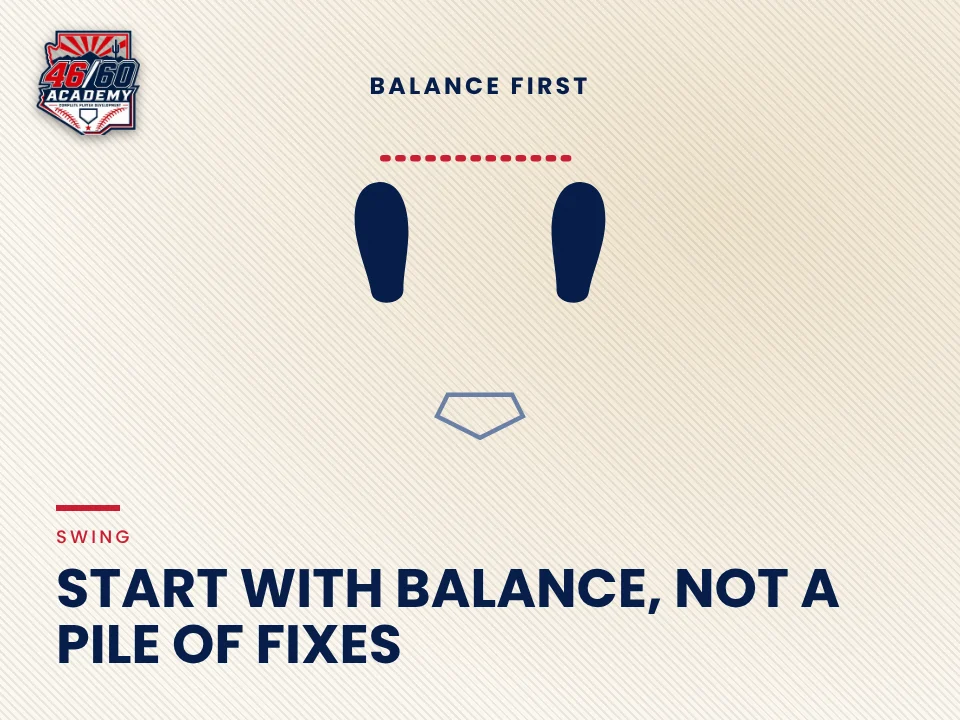
If a young hitter falls over, spins off or finishes tangled, fix balance before the hands. Have them take five easy swings and hold each finish for two seconds; if they can't, slow the swing down until they can.
Train it: 30-Day Swing Structure →What “athletic” means
It means knees softly bent, body ready to move and eyes calm. It does not mean frozen. Young hitters should look like they could jump, run or change direction from their stance.
The freeze-finish game
Take five easy dry swings. After each one, hold the finish for two seconds. Can the player stay under control without taking a big extra step? If not, slow down the swing until they can.
Why this matters
Balance gives a hitter more time. It helps them handle pitches that are not perfect. It makes it easier to repeat a swing. It also makes the game feel less rushed.
Parent reminder: Do not chase perfection. Look for a player who is becoming more athletic through the whole swing, one easy rep at a time.
Parent questions
Why does my child fall over when they swing?
They are usually swinging harder than they can control. Slow the swing until they can hold a balanced finish, then build speed back up.
What does an athletic stance look like for kids?
Knees softly bent, body ready to move and eyes calm. The player should look like they could jump, run or change direction—not frozen.
Why is balance so important in hitting?
Balance gives a hitter more time, helps them handle imperfect pitches and makes the swing easier to repeat.