
A good bunt can move a runner, beat out a hit and give a nervous hitter an early success. It also teaches kids to watch the ball all the way to the bat. Here is a simple way to teach it at home, with safety first.
Have your child turn to face the pitcher with the bat out in front, top of the bat higher than the handle, bottom hand on the handle and top hand slid up the bat behind the barrel with fingers safely behind it. Then “catch” the ball with the bat by moving the body up and down, not by jabbing the bat at the ball.
Train it: 30-Day Bunting →Safety first: protect the fingers
The top hand slides up the bat to control it. Teach your child to pinch the bat with the thumb on top and the fingers behind the bat, never wrapped around the front where the ball can hit them. Start with soft balls until the grip is automatic.
The basic bunting position
- Turn to the pitcher. Feet comfortable, knees bent, chest facing the pitcher.
- Bat out front. The bat sits in front of the plate, at the top of the strike zone, with the barrel a little higher than the handle.
- Soft hands. The bottom hand holds the handle; the top hand pinches the bat behind the barrel.
- Eyes behind the bat. Your child should see the ball right over the top of the bat.
Catch the ball with the bat
The most common bunting mistake is jabbing at the ball. Teach your child to catch it instead. If the pitch is low, bend the knees and go down with it; don’t just drop the barrel. Keep the bat angle the same and let the ball hit the bat, then give a little to deaden it.
Three backyard bunting drills
- Catch it: from a short distance, toss soft balls and have your child “catch” each one on the bat and let it drop in front of the plate.
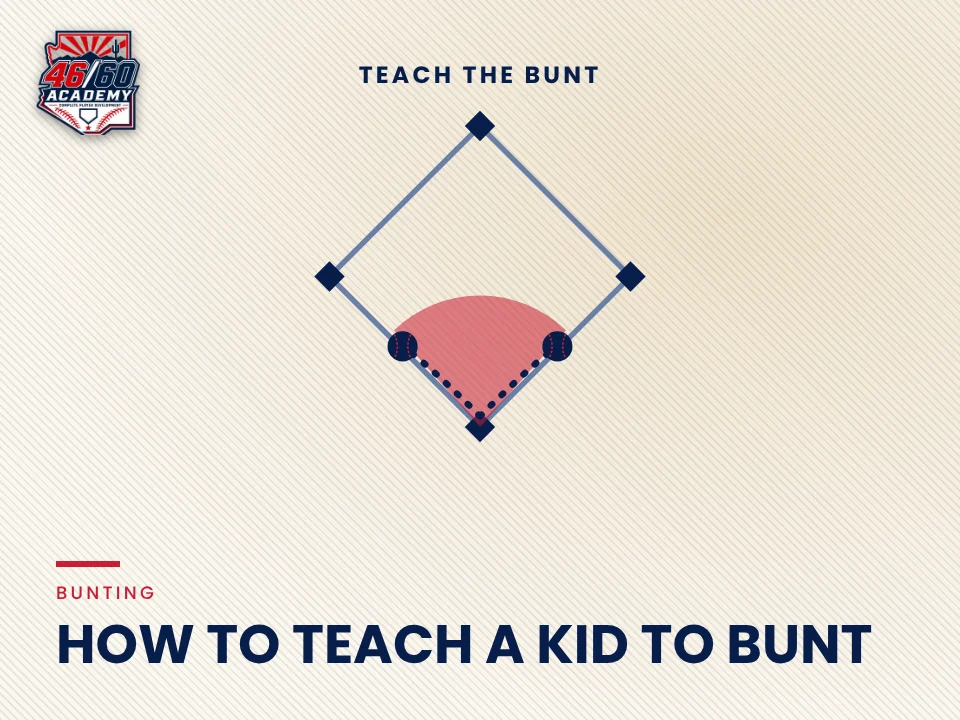
- Hoop targets: lay two hula hoops or towels down the first- and third-base lines. Points for bunts that stop in a target.
- Up and down: toss high and low strikes. Your child moves with the legs, not just the arms, to stay behind the ball.
One thing to remember
A bunt is a catch with the bat. Soft hands, eyes behind the bat, and move with the legs.
What to do this week
Practice the grip with soft balls until the fingers stay behind the bat every time. Then play “catch it” for five minutes, three days this week.
Parent questions
What age should kids learn to bunt?
Many kids can start learning the basics around 7 or 8 with soft balls. Check whether your league allows bunting at your child’s age.
Is bunting allowed in all youth leagues?
No. Some younger divisions limit or don’t allow bunting. Check your league’s rules.
Is bunting different in softball?
The basics are the same. Softball also has the slap and more bunting in the game, so softball players often learn it early.
This article is part of the 46/60 parent guide How to Teach a Kid to Hit. Start there for every related article and game.