
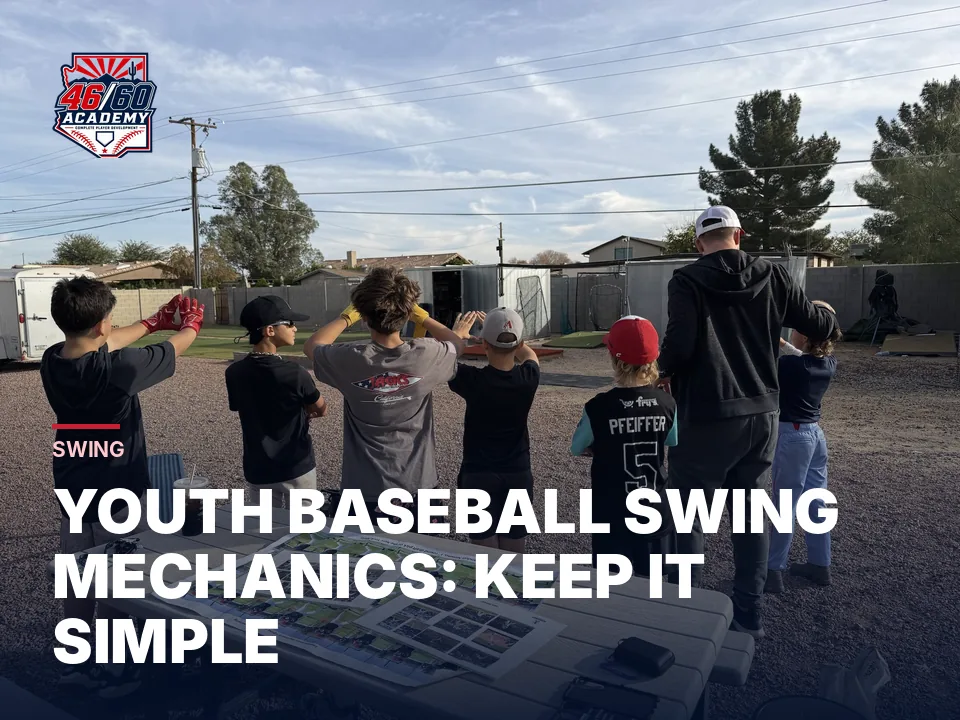
When people talk about youth baseball swing mechanics, the conversation can get complicated fast. For a player age 7–12, the best teaching order is simple: get athletic, make a balanced move, bring the barrel to the ball, and finish under control.
Youth baseball swing mechanics for ages 7–12 come down to four checkpoints: an athletic setup, a small gather and stride, hands and barrel working through the ball, and a balanced finish. Work on the biggest need first, one focus at a time.
Train it: 30-Day Swing Structure →By age: Hitting drills by age, 7U–12U →
The four checkpoints
- Athletic setup: The player looks ready to move, not locked or uncomfortable.
- Gather and stride: A small rhythm move helps them start on time and land balanced.
- Contact: Hands and barrel work through the ball instead of casting away from the body.
- Finish: The player stays athletic long enough to see where the ball went.
Do not rebuild everything at once.
Choose the biggest need. If a hitter is falling over, work on balance. If they are dumping the barrel early, use a simple tee height or dry-swing constraint. One clear focus is easier to feel and repeat.
One thing to remember
The goal is a swing that gives a young player the largest margin for solid contact—not a swing that only looks good in a freeze-frame.
Parent questions
What are the basic mechanics of a youth baseball swing?
Athletic setup, a small rhythm move and stride, the barrel working through the ball, and a finish where the player stays athletic.
What is casting in a youth swing?
Casting is when the hands and barrel push away from the body early instead of working through the ball. Simple tee-height and dry-swing constraints help fix it.
Should I change my child's whole swing?
No. Pick the biggest need—like balance—and fix that first. One clear focus is easier to feel and repeat.
This article is part of the 46/60 parent guide How to Teach a Kid to Hit. Start there for every related article and game.