
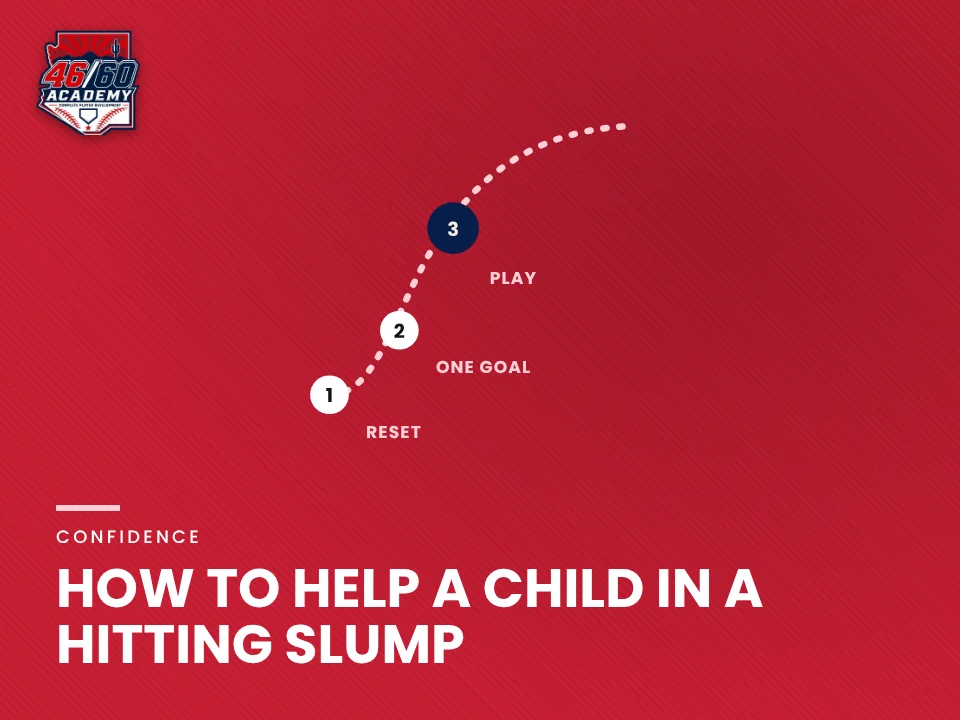
A slump hurts more when you are 9. Your child may be quiet in the car, frustrated in the cage, or saying “I’m just bad at hitting.” As a parent, you want to fix it. The best help is usually less coaching, not more, and a small plan your child can feel good about.
Keep the talk short and calm, separate their effort from their results, and look for one simple cause (timing, a heavy bat, swinging at bad pitches or nerves). Then rebuild with easy wins: soft toss, tee work and fun games where success is likely. Count good at-bats, not hits.
Train it: 30-Day Mental Approach →What to say (and what not to say)
Kids remember how you react more than what you say. In a slump, keep it short and steady.
- Say: “I love watching you play.” “Every hitter goes through this.” “What felt good today?”
- Avoid: long breakdowns in the car, comparing them to teammates, or “you just need to want it more.”
Our guide to what to say after a game has more simple scripts.
Find one cause, not ten
Slumps usually have one main cause. Watch a game or a practice and pick the most likely one:
- Late on the ball: fouling pitches back or swinging after the ball is past. Work on getting ready earlier.
- Swinging at bad pitches: chasing balls in the dirt or over the head. Work on a simple plan and the strike zone.
- Heavy bat: the swing looks slow and the barrel drops. Check the bat.
- Nerves: fine in practice, tight in games. Work on a short routine before each pitch.
Fix one thing at a time. Ten tips at once makes any hitter tense.
Rebuild with small wins
Confidence comes back from evidence. Give your child sessions where success is likely: tee work, soft toss and wiffle balls. End every session on a good swing.
Change the scoreboard too. A hard-hit out, a good take on ball four and a strong swing at a strike all count as good at-bats. Track those for a week and show your child the number going up.
A routine for nerves
A short routine helps kids feel in control. Try: one big breath, one power word (“See it!”) and one move (tap the plate). The free Breathe & Ready! game helps your child build their own.
One thing to remember
Slumps end. What lasts is whether your child learned they can work through something hard, with you on their side.
What to do this week
Pick one likely cause and one fix. Do three short sessions that end on a good swing, and track good at-bats instead of hits at the next game.
Parent questions
How long do slumps last for kids?
It varies. Many end within a couple of weeks once the main cause is fixed and the pressure comes down.
Should my child take a break from baseball?
A few days off can help a frustrated child reset. If the frustration lasts for weeks, talk with your child about what they are enjoying and what they are not.
Should I get my child hitting lessons during a slump?
Lessons can help find the cause faster. Look for a coach who gives one clear priority rather than a long list of changes.
START 30-DAY MENTAL APPROACH →
This article is part of the 46/60 parent guide The Baseball & Softball Parent Guide. Start there for every related article and game.