
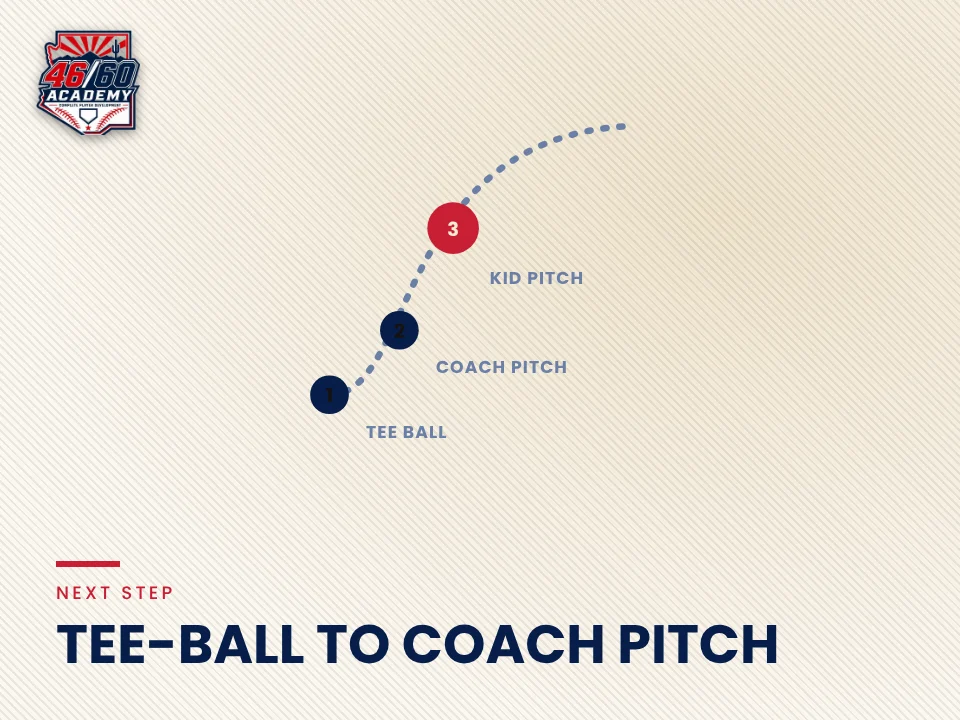
In tee-ball, the ball waits for your child. In coach pitch, it doesn't. That one change can make a confident tee-ball hitter look lost for a few weeks, and that is completely normal.
Moving from tee-ball to coach pitch, the biggest change is that hitters must see a moving ball and time their swing to it. Help at home with short, fun soft-toss games, a steady ready position and lots of practice just watching the ball.
Train it: 30-Day Hitting Processor →By age: 8U baseball hitting drills →
What actually changes when the ball starts moving?
On a tee, your child can take their time. They look at the ball, set their feet and swing when they are ready. The ball is always in the same place.
In coach pitch, a grown-up tosses the ball from a short distance. Now your hitter has three new jobs:
- See it: pick up the ball out of the coach's hand and follow it in.
- Time it: start the swing early enough to meet the ball, not chase it.
- Decide: swing at good pitches and let the bad ones go.
That is a lot for a young hitter. Distances, how many pitches a hitter gets and when a tee comes back out are different in every league, so check your league's rules.
Why timing is the hardest part
Most young hitters swing late at first. They wait to see the ball arrive, and by then it is already past them. Some swing early because they are excited.
Good news: timing is a skill, and skills grow with reps. Kids learn timing by seeing lots of soft, easy tosses and feeling what "on time" is like.
A simple cue that helps: "Get ready when the coach's arm goes back." That gives your child a signal to start loading instead of waiting until the ball is close.
Watch where your child makes contact. Late swings usually send the ball the opposite way or foul it back. Early swings pull it hard foul. Either way, it is a clue, not a problem. Just adjust when they start getting ready.
Expect a few rough weeks. Many hitters swing and miss a lot early in their first coach-pitch season. Praise good swings and good looks at the ball, and the hits will start to come.
Helping your child see the ball
Many kids at this age look at the pitcher's face, the fence or their own bat. Seeing the ball is something we can practice, and it does not even need a swing.
Try the "Call the Color" game: write a big dot with a marker on a few plastic or foam balls in different colors. Toss softly and have your child call the color before it reaches them. Do 10 tosses, then switch to swinging.
Seeing the ball and deciding when to swing is exactly what we build in the 30-Day Hitting Processor, in short daily sessions you can do together.
A ready position that makes timing easier
On a tee, kids can get away with a sloppy stance. Against a moving ball, a calm, balanced start makes everything easier.
- Feet a little wider than shoulders, knees soft.
- Weight in the middle of the feet, not the heels.
- Hands up near the back shoulder, relaxed grip.
- Both eyes looking at the coach, head still.
Have your child hold this "ready" pose for a slow count of three, then swing. If they wobble, widen the feet a bit. Balance first, power later.
Make it a game: you say "Ready!" and they snap into the pose, then "Swing!" and they swing and hold the finish. Mix up the timing so they have to stay alert. It is a fun way to practice being ready before the ball comes.
How to prepare at home before the season
You do not need a cage. A backyard, a driveway or a park with soft balls is plenty. Keep sessions to 10 to 15 minutes and stop while it is still fun.
- Tee warm-up (3 minutes): easy swings to feel solid contact.
- Side soft toss (4 minutes): kneel to the side and toss underhand into the hitting zone with foam or wiffle balls.
- Front toss from close (4 minutes): sit behind a small screen or stand at a short, safe distance and toss underhand, slow and easy.
- Call the Color (2 minutes): no swinging, just seeing.
Toss softer and slower than you think. Lots of contact builds confidence, and confidence makes kids want to keep swinging. Keep a helmet on during live tosses and give plenty of space.
One thing to remember
Missing a moving ball is part of learning, so cheer the good swings and the good looks, not just the hits.
What to do this week
Do two or three short home sessions with soft tosses and one round of Call the Color each time. If you are not sure where your hitter should start, take the free Quick Check for one clear first step.
Parent questions
What age do kids start coach pitch?
It depends on the league, and every program sets its own age groups. Check your league's rules for your child's division, and focus on readiness more than age.
Should my child still hit off a tee after moving to coach pitch?
Yes. The tee is great for feeling solid contact and a good swing path. Mix tee work with soft tosses so your child practices both the swing and the timing.
Why does my child swing late in coach pitch?
Most young hitters wait to see the ball arrive before starting. Teach them to get ready when the coach's arm goes back so the swing can start on time.
This article is part of the 46/60 parent guide How to Teach a Kid to Hit. Start there for every related article and game.