
COMPLETE HITTER · AGES 7–12
Hitting is a whole game—not one swing.
When a young hitter struggles, adults often search for one mechanical fix. But a miss can come from many places: balance, timing, pitch recognition, confidence or the path of the bat.
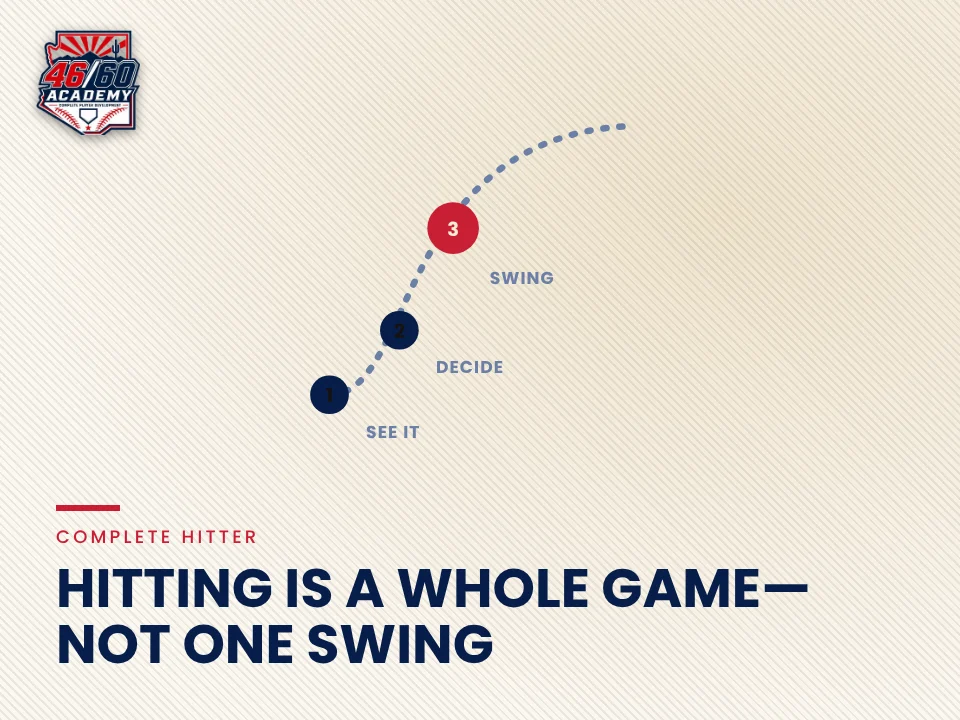
When a young hitter struggles, the cause can be balance, timing, seeing the pitch, confidence or bat path—not just one mechanical flaw. Ask “What made that pitch hard?” instead of “What was wrong with that swing?” and train the whole player.
Train it: 30-Day Complete Hitter →That is good news. It means a player is not “broken.” They are learning a fast, hard game with many connected parts.
Build the whole player
Let players run and jump. Give them pitches to take. Let them try different speeds and locations. Ask them what they saw. Encourage them after a miss. Those things all support the swing.
A better practice question
Instead of “What was wrong with that swing?” ask, “What made that pitch hard?” The answer might be that it was inside, slow, high, moving or simply surprising. That helps the player learn to solve the game.
One-round challenge
Give a hitter six tosses: two middle, two inside and two outside. The goal is to make solid contact while staying balanced. No need for a technical speech between every ball.
Remember: Contact is the result of many small jobs working together. Keep the game whole, and young hitters stay curious.
Parent questions
Why does my child keep missing the ball?
Misses can come from timing, not seeing the ball well, balance or nerves as often as from the swing itself. Look at what made the pitch hard before changing mechanics.
What is a good drill for contact at different locations?
Give six tosses: two middle, two inside and two outside. The goal is solid contact while staying balanced, with no speech between pitches.
Does my young hitter need swing changes?
Often not. Building athleticism, pitch tracking and confidence can fix contact problems without rebuilding the swing.