
At 10U, a lot of leagues move to kid pitch, and that changes the catcher's job overnight. Pitches bounce, sail and skip to the backstop, and runners start looking for extra bases. These drills turn a 9- or 10-year-old in the gear into the player who keeps the game calm.
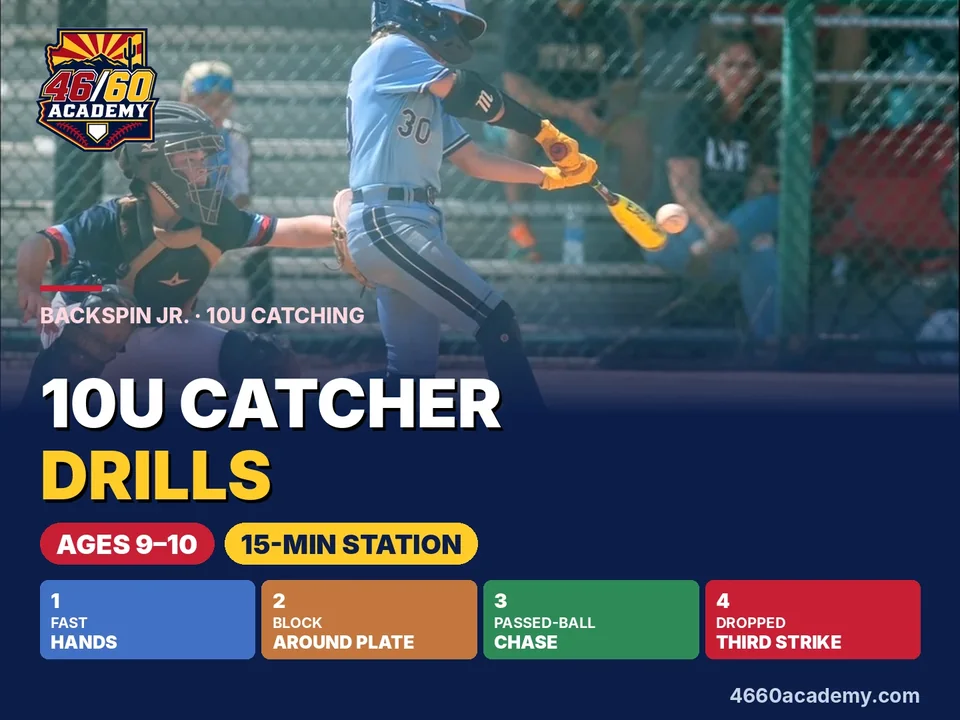
The best 10U catcher drills are fast-hands receiving with soft balls, blocking around the plate, chasing down passed balls, and the dropped-third-strike throw to first. Work in that order, always in full gear, and give catchers their own 15-minute station at practice.
Train it: Catcher Leadership Lab (Level 2 Catching) → Free: Free Catching Intro Course →What should a 10U catcher work on first?
Catching comes first. USA Baseball's catcher progression, shared by Little League, says the number one priority for a catcher is just that: catching. A 10-year-old who catches pitches cleanly gives a young pitcher confidence and gets more strikes called.
After that, here is the order we teach at 10U:
- Receiving: a relaxed hand that catches the ball quietly and holds it still.
- Blocking: getting down fast and keeping the ball in front.
- Chasing: finding and getting a passed ball before the runner scores.
- Throwing: a clean exchange and quick feet, not a bigger arm.
Most 10U innings are won or lost on the first three. A catcher who keeps the ball close stops a lot of runners from ever leaving the base.
Receiving and blocking drills for 9- and 10-year-olds
Use soft training balls or tennis balls for every drill here until your catcher is comfortable. Full gear on, every rep.
- Fast hands: the catcher sits in the stance with the bare hand up, and you kneel about six feet in front. Toss balls quickly with both hands, and the catcher catches each one and flips it aside. This idea comes from a youth catching article in the American Baseball Coaches Association's magazine. Twenty tosses.
- Bucket receiving: put the mitt on and sit the catcher on an upside-down bucket so the legs are out of it. Toss to all parts of the zone. Catch with the hand behind the ball and hold it still for a count of one.
- Pre-set block: catcher starts on both knees, mitt on the ground between them. Toss soft balls into the dirt in front. Chin tucked, breathe out, let the ball hit the chest protector. Ten reps.
- Around the plate: from the stance, block behind the middle of the plate, then shuffle and block toward the third-base corner, then the first-base corner. It works as a warm-up and teaches blocking when tired.
The cue from the USA Baseball progression is to breathe out just before the ball hits. A soft body drops the ball in front. A stiff body bounces it away.
Passed balls and dropped third strikes
This is the part of the 10U catcher's job that most practice plans skip, and it's where a lot of runs score. Many leagues at this age allow stealing and dropped-third-strike plays, but rules vary a lot at 9 and 10, so check your league's rules first.
- Find it and point: from the stance, block a soft toss, pop up and point at the ball before moving. Finding it fast is half the battle.
- Passed-ball chase: toss a ball behind the catcher. They take off the mask, turn, run to the ball, pick it up and turn to face home. Your pitcher runs in to cover the plate and calls which side the ball went to.
- Dropped third strike: catcher holds a ball in the mitt, drops it, picks it up, steps to the inside so the throw clears the runner, and throws to a partner at first. Add a runner once it's clean.
Coach BK says "Two choices: A. Do everything in your control. B. Anything but A." A catcher can't control a wild pitch, but they can control how fast they find it and how hard they hustle to it.
Throwing drills without wearing out the arm
At 10U, throwing out runners is about the exchange and the feet. The USA Baseball progression breaks the exchange into three slow steps: catch, turn the mitt toward the throwing hand, and take the ball out with a good grip. Do it in slow motion first, then speed up.
- Exchange only: 10 slow catch-turn-take reps with no throw.
- Footwork only: pop up and turn toward second without throwing. Feet first, arm second.
- Short throws: only when the exchange and feet are clean, add a few throws to a partner at a shorter distance.
- Stop early: if throws get weaker or wilder, the arm is tired. If it hurts, stop right away.
One arm-care note for parents: MLB and USA Baseball's Pitch Smart guidelines for ages 9 to 12 say to avoid playing catcher while not pitching. If your child pitches too, talk with the coach about how the two jobs are split.
A 15-minute catcher station for 10U practice
Catchers get better when they have their own station instead of just warming up pitchers. Here is a station that fits inside any practice.
| Minutes | Drill | Goal |
|---|---|---|
| 0–3 | Fast hands | Quick, soft bare hand |
| 3–6 | Bucket receiving | Hold the catch still |
| 6–10 | Pre-set block, then around the plate | Chin down, ball in front |
| 10–13 | Passed-ball chase | Find it, get it, turn |
| 13–15 | Dropped third strike | Clear throw to first |
Coach BK loves to tell players "It's a great day to be you!!" Catchers set the energy for the whole field, so let yours be loud, talk to the pitcher between pitches and own the station.
One thing to remember
At 10U the best catcher isn't the one with the biggest arm; it's the one who keeps the ball close.
What to do this week
Do the fast-hands and pre-set block drills twice this week in the backyard with soft balls, 10 minutes each time. At the next practice, ask the coach if catchers can run the 15-minute station.
Parent questions
Is catcher a safe position for a 10-year-old?
Yes, when the gear fits and the drills start with soft balls. Make sure the helmet, chest protector and shin guards fit snugly, boys wear a protective cup, and your child stops and tells a coach if anything hurts.
How do I know if my kid would like catching?
Kids who like being in the action, talking and leading often love it. Let them try a few innings in practice and a backyard session of fast hands before deciding.
Should my 10U catcher pitch too?
Many kids do both, but Pitch Smart's guidelines for ages 9 to 12 say to avoid playing catcher while not pitching. Talk with the coach about rest and check your league's pitching rules.
SEE CATCHER LEADERSHIP LAB (LEVEL 2 CATCHING) →
Sources: Little League University (USA Baseball): Catcher Drill Progression · ABCA Inside Pitch: Building a Better Backstop — Catching Fundamentals for the Youth Player · MLB & USA Baseball Pitch Smart: Pitching Guidelines, Ages 9–12