
A batting tee may be the most-used piece of hitting gear your child ever owns. It lives in the garage, goes to the park and gets clipped by a few thousand swings. The good news: you don't need anything fancy, just a tee that gets three things right.
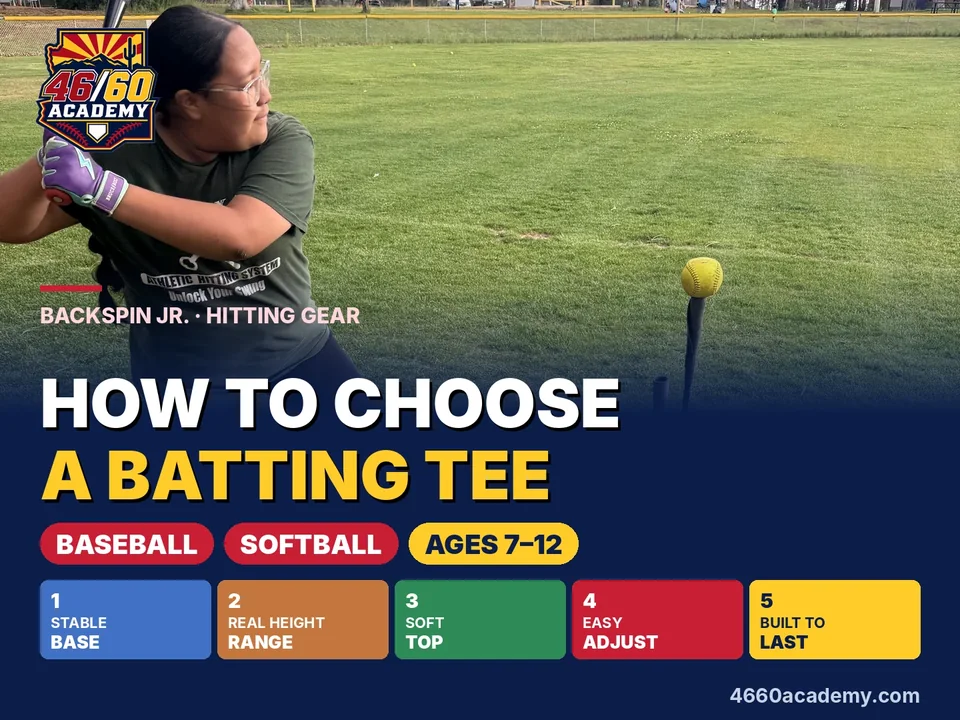
Choose a batting tee with a heavy, stable base, a height that adjusts from about your child's knees to their chest, and a soft, flexible top that won't jar the bat or tip over. One sturdy tee works for baseball and softball for years; extra features matter less than daily use.
Train it: Complete Contact Builder (Level 2 Hitting, $49) → Free: Free Hitting Intro Course →Why the tee still matters after tee ball
A tee isn't just for 5-year-olds. With no speed or movement to deal with, it's the cleanest way for a young hitter to learn contact, then sharpen the swing as they get older.
USA Baseball's hitting progression starts every hitter on the tee, then moves to soft toss and front toss. Older players also use it to practice pitches in different parts of the zone by moving the tee in, out, up and down.
So think of the tee as something your child will use from 7 to 12 and beyond. That changes what's worth paying attention to.
What should I look for in a batting tee?
Skip the bells and whistles at first. These five things decide whether a tee gets used or ends up in the corner:
- A stable base: heavy enough that it doesn't tip when the bat clips the top. Many tees have a weighted or rubber base. A tee that falls over every third swing frustrates kids fast.
- A real height range: it should go low enough for a knee-high pitch and high enough for a chest-high one for your child, not just a grown-up. Kids grow, so a wide range lasts longer.
- A soft, flexible top: the bat will hit the tee sometimes. A rubbery top that bends forgives that miss instead of stinging the hands or knocking the tee over.
- Easy height changes: a twist or slide your child can do alone. If only an adult can adjust it, it'll stay at one height forever.
- Durability: it lives outside, gets kicked and gets thrown in the trunk. Sturdy beats fancy.
A base shaped like home plate is a nice bonus. It shows your child where the plate is, which helps when you start moving the tee for inside and outside pitches.
Does a softball player need a different tee?
Usually not. Most youth tees hold both baseballs and softballs, so one tee can serve a whole family. Before you buy, check that the top holds the ball size your child uses without wobbling.
Softball and baseball hitters both need practice on low pitches, so a tee that goes down near your child's knees is worth having. For ball size, check your league's rules, then match the tee to the ball.
One tee, two tees or a multi-position tee?
| Type | Good for | Skip it if |
|---|---|---|
| Standard single tee | Most kids 7–12; contact, height and location work | Never. Start here. |
| Two tees, or a multi-position tee | 10U–12U hitters learning contact points for inside and outside pitches | Your child is still learning to hit the ball solidly |
| Tee plus a net | Daily backyard or garage swings without chasing balls | You have a big open field and helpers to shag |
For most families, one sturdy tee and a net cover years of practice. Add a second tee later if your 10- to 12-year-old is working on contact points.
One of Coach BK's favorite tee cues: "Get on the backside of one, baby!" The tee is the best place to learn to drive the barrel through the back of the ball, and one good tee your child uses every day beats a garage full of gadgets.
How to set up the tee safely
- Clear the swing zone: nobody stands near the hitter. Little brothers and sisters especially.
- Use softer balls indoors: plastic, foam or other soft practice balls, with plenty of space and a net.
- Start belt-high, middle of the plate: then move it once your child is making solid contact.
- Short sets: 5 to 10 swings with one goal, then a break. Stop if anything hurts.
Not sure how to set it up or what to do next? Our batting tee drills post covers placement and four simple drills. The free Hitting Intro Course gives you seven parent-led lessons, and Complete Contact Builder ($49) is our four-week, 16-session Level 2 hitting program for baseball and softball players 7–12.
One thing to remember
The best batting tee is a stable one your child can adjust and will actually use every day.
What to do this week
Check your tee: does it stay up when the bat clips it, and can your child move the height alone? Then do three short tee sessions this week, 10 swings each, at belt height first and knee height last.
Parent questions
What height should a batting tee be for a kid?
Start about belt-high on your child, over the middle of the plate. Once they hit that solidly, practice lower and higher pitches too, so pick a tee that adjusts from their knees to their chest.
Is a weighted batting tee worth it?
For most kids, yes. A heavier, stable base stays up when the bat clips the tee, which keeps practice moving and keeps kids from getting frustrated.
Can you use a baseball tee for softball?
Usually, yes. Most youth tees hold both baseballs and softballs. Check that the top holds your child's ball size without wobbling before you buy.
SEE COMPLETE CONTACT BUILDER (LEVEL 2 HITTING, $49) →
Sources: Little League University (content from USA Baseball) — Hitting Drill Progression