
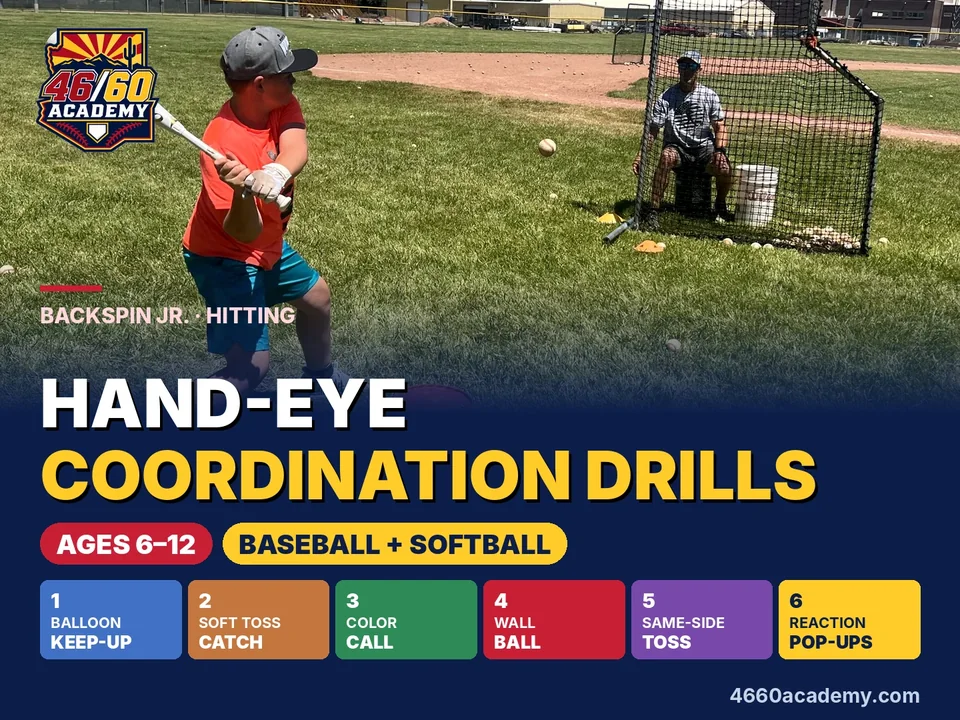
The best hand-eye coordination drills for kids are short, fun games that make a child watch a moving ball and react, like balloon taps, color calls, wall ball and reaction pop-ups. Ten minutes most days, with soft balls and easy wins, builds it faster than one long session. Kids who swing and miss a lot, or flinch when a ball comes their way, usually just haven't had enough fun reps watching and catching a moving ball yet. Here are simple drills, age by age, that build it at home.
Good hand-eye coordination drills for kids are short, fun games that make a child watch a moving ball and react: balloon taps and soft toss for little ones, color calls, wall ball and same-side toss for 8- to 10-year-olds, and reaction pop-ups and small-ball front toss for 11- and 12-year-olds. Do 10 minutes most days.
Train it: Complete Contact Builder (Level 2 Hitting) → Free: Free hitting skill guide →What does hand-eye coordination mean in baseball and softball?
It's the eyes telling the hands where the ball is going, fast enough to catch it or hit it. That skill shows up everywhere: catching a throw, fielding a grounder and, most of all, making contact at the plate.
The good news is that it improves with practice, and kids improve fastest with lots of quick, successful reps. Keep each game short, keep the ball soft, and make it easy enough that your child wins most of the time before you make it harder.
What hand-eye games work for ages 6–7?
- Balloon keep-up (3 minutes): tap a balloon with an open hand, then with a paddle or foam bat, and don't let it touch the floor. Slow balloons give little eyes time to track.
- Bubble pop (2 minutes): blow bubbles and have them pop as many as they can with one finger, then with the other hand.
- Soft toss catch (5 minutes): kneel close and toss a beanbag or soft ball underhand. They catch with two hands, "thumbs together" above the belly button and "pinkies together" below it.
At this age, success matters more than the skill. Cheer every catch and stop while it's still fun.
What hand-eye drills work for ages 8–10?
Color call (5 minutes). Use soft balls in two colors, or put a marker dot on some of them. Toss one at a time. Your player shouts the color before catching it. Calling the color makes them watch the ball all the way in instead of guessing.
Wall ball (5 minutes). Your player throws a tennis ball or soft rubber ball against a sturdy wall, outdoors, and catches it with the glove. Start close and slow. Then try catching only with the glove hand, and then backhands.
Same-side toss (5 minutes). Two players stand 5 to 10 feet apart, each holding a ball in the right hand. On "Go!" they toss at the same time to each other's left hand. After ten tosses, switch hands. Two balls in the air at once makes the eyes and hands work fast, and it trains the catch-and-transfer to the throwing hand.
What hand-eye drills work for ages 11–12?
Older players are ready for faster and smaller. Small-ball front toss (8 minutes): from behind a protective screen, toss plastic golf-size practice balls or foam balls. A smaller ball makes the regular ball feel bigger later.
Reaction pop-ups (5 minutes): the player gets in a ready position about 10 feet away. On "Go!" they spin around once while you toss a ball high. They find it, call "Mine!", get under it and catch it with the glove where they can see the ball go in. Use a tennis ball until they're confident.
Coach BK has a line for this age: "The ball ain't changing shape, I promise ya that." Pitchers get faster, but it's the same ball, so the same habit of watching it all the way still works.
What does a safe 10-minute daily hand-eye plan look like?
| Age | Day plan (10 minutes) |
|---|---|
| 6–7 | Balloon keep-up, bubble pop, soft toss catch |
| 8–10 | Color call, wall ball, same-side toss with a partner |
| 11–12 | Reaction pop-ups, small-ball front toss behind a screen |
Use soft or foam balls indoors and leave plenty of space. Anyone tossing to a hitter should be behind a protective screen. If your child struggles with every game, mention it at their next checkup; their pediatrician can check vision.
For more ideas, our free hitting skill guide has age-right drills and cues. When you want a full plan, Complete Contact Builder is our 16-session Level 2 hitting program for baseball and softball players 7–12, included in the $25/month 46/60 membership.
One thing to remember
Hand-eye coordination grows from lots of short, successful reps with a ball your child can watch all the way in.
What to do this week
Pick the three games for your child's age and do them for 10 minutes on four days. Keep a simple count, like catches in a row, and try to beat it by Friday.
Parent questions
Can you improve a child's hand-eye coordination?
Yes. Kids get better at tracking and catching a ball with regular, fun practice. Short daily games with soft balls work better than one long session a week.
What age do kids develop hand-eye coordination for baseball?
It keeps developing through childhood, and kids grow at different speeds. A 6-year-old who struggles to catch is normal; start with slower balloons and beanbags and build up.
Do video games help hand-eye coordination for hitting?
Real balls are the best hand-eye practice for catching and hitting, because kids have to judge a real ball moving toward them. Spend most practice time on short real-ball games like color call, wall ball and soft toss catch.
SEE COMPLETE CONTACT BUILDER (LEVEL 2 HITTING) →
Sources: Little League — Backyard Tip: Same Side Toss · Little League — Backyard Tip: Reaction Pop-Up Drill