
Every kid wants to slide. They see it on TV and want to try it on the first play of the season. Sliding is fun, but it is also where a lot of bumps and scrapes happen, so we teach it slowly, on soft ground, with an adult right there.
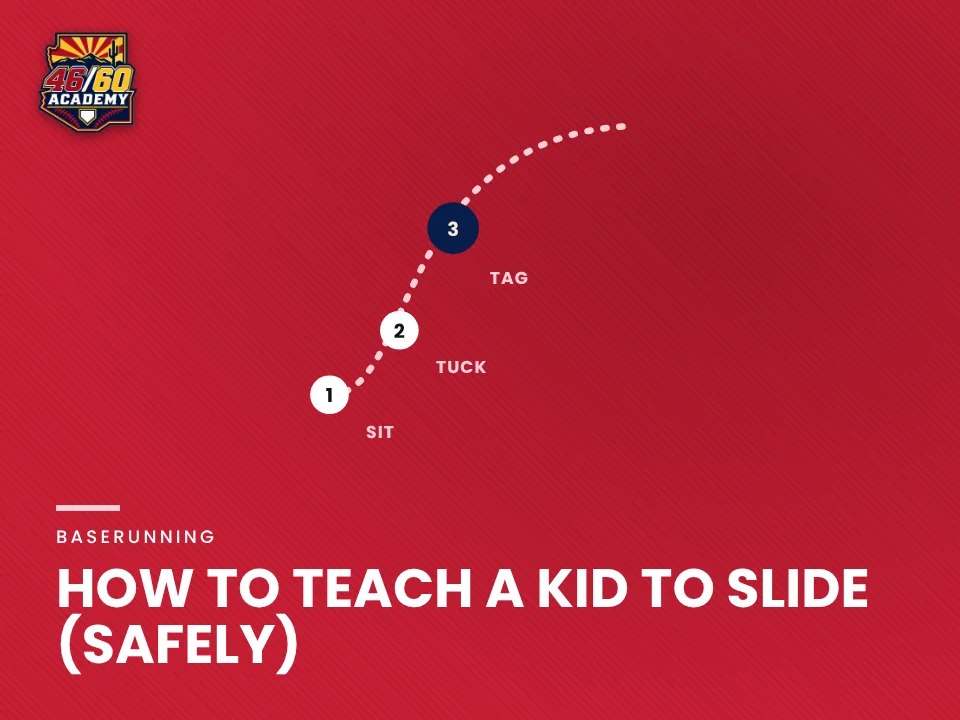
Teach a kid to slide feet first with a bent leg: sit down early, tuck one leg under the other knee, keep hands up and touch the base with the straight leg. Start in socks on wet grass with no base, and check your league's rules before sliding in games.
Train it: Smart Baserunner (Level 2 Baserunning, $49) → Free: Free Baserunning Intro Course →What age should a kid learn to slide?
Sooner is not better here. The American Orthopaedic Society for Sports Medicine advises not teaching sliding to children under 10, and says beginners should practice without a base first.
So for our 7, 8 and 9 year olds, we work on the base-running habits that matter more: running hard through first, turning the right way and stopping on the bag under control. Those habits win more bases than a slide ever will.
Around 10 to 12, if your player runs well and wants to learn, the slow progression below is a good place to start. Every kid is different, so go at their pace. Check your league's rules, too, because some leagues have their own sliding rules.
The feet-first bent-leg slide, step by step
This is the one slide we teach young players. It is simple, it keeps the head and hands away from the base, and the runner can pop up if the ball gets away.
- Start early: begin the slide a few body lengths before the base, not right on top of it.
- Sit down: drop your bottom to the ground like sitting on a slide at the park. Don't jump or dive.
- Tuck one leg: bend one knee and tuck that foot under the other knee, making a figure 4.
- Lead with the straight leg: the top leg points at the base with a slightly bent knee and the foot up.
- Hands up: keep hands off the ground. A small trick is to hold a little grass or a batting glove in each fist.
- Chin tucked: eyes on the base, back leaning a little, never flat.
What to look for: a smooth sit, not a crash. If your player lands hard on a hip or puts a hand down, slow everything down and go back a step.
A safe practice plan: grass, socks, no base
We never teach sliding on dirt or with cleats on day one. Start soft and slow, then add speed only when the shape is right.
| Step | Setup | Move on when |
|---|---|---|
| 1. Sit and tuck | Flat grass, standing still, socks only | The figure 4 happens without thinking |
| 2. Walk and sit | Wet grass or a slip mat, walking pace | Hands stay up every time |
| 3. Jog and slide | Same surface, easy jog, no base | Smooth sit, no crash |
| 4. Add a soft target | A towel or a flat throw-down base | Touches the target with the lead foot |
| 5. Real base | Breakaway base if available, sliding shorts or pants, coach watching | Game-ready and calm |
Keep each session short, about 10 minutes and maybe 8 to 10 slides. Rinse off, check for scrapes and quit while it's still fun. In the Arizona heat, slide early in the morning or in the evening, with water and shade nearby. Check the grass for sprinklers and rocks first. If anything hurts, stop.
Here in Scottsdale, a slip-and-slide on the lawn makes a great sliding lesson on a summer evening. As Coach BK tells every player, run aggressive and athletic, but learn it slow before you do it fast.
When should my kid slide in a game?
Knowing when to slide matters as much as knowing how. Keep it to a few clear times, and let the base coach help.
- Close play at second or third: slide so the runner stops on the bag instead of running past it.
- Coach signals down: hands pointing down means slide. Teach your player to look for it.
- Never at first base on a ground ball: run through first. It's faster.
- Home plate: follow the coach and check your league's rules, which often have special rules at home.
- When in doubt: slide rather than crash into a fielder. Avoiding collisions keeps everyone safe.
Play Slide or Stand in the yard: your player jogs toward a towel while you call "slide!" or "stand up!" at the last moment. It builds quick listening and a calm body.
Why head-first slides wait
Head-first slides look exciting, but they put the head, hands and fingers out in front. Doctors at the Hospital for Special Surgery note that head-first slides can injure fingers, wrists or elbows when a player slides into a fixed base.
That is a big reason many youth leagues restrict head-first sliding for younger players. The rules differ by league, age and baseball or softball, so check your league's rules before the season.
Feet-first slides have risks too, mostly ankles and knees against a base that doesn't move. That's why we start with no base, add a soft target and use breakaway bases when they're available.
The free Baserunning Intro Course builds the running habits that come before sliding. When your player is ready for more, Smart Baserunner ($49) is our 16-session Level 2 program on reads, turns, tag-ups and smart, league-legal decisions.
One thing to remember
Feet first, bent leg, hands up, and learn it slow on soft grass before it ever happens in a game.
What to do this week
If your player is 10 or older and wants to slide, do three short sessions on wet grass in socks with no base. Work only on sit-and-tuck and walk-and-sit until the figure 4 is automatic.
Parent questions
Should my 8-year-old learn to slide?
Sports medicine guidance says not to teach sliding to children under 10. For younger players, focus on running through first, turning and stopping on the bag, and check your league's rules.
Is head-first sliding allowed in youth baseball?
It depends on your league and age group, and many youth leagues restrict it. Check your league's rules, and teach the feet-first slide first either way.
How do I keep my child from getting scraped when sliding?
Practice on wet grass or a slip mat in socks, then wear sliding shorts or full baseball pants when moving to dirt. Keep sessions short and check the ground for rocks first.
SEE SMART BASERUNNER (LEVEL 2 BASERUNNING, $49) →
Sources: AOSSM: Baseball Injuries (base running and sliding tips) · Hospital for Special Surgery: Proper sliding technique and safety