
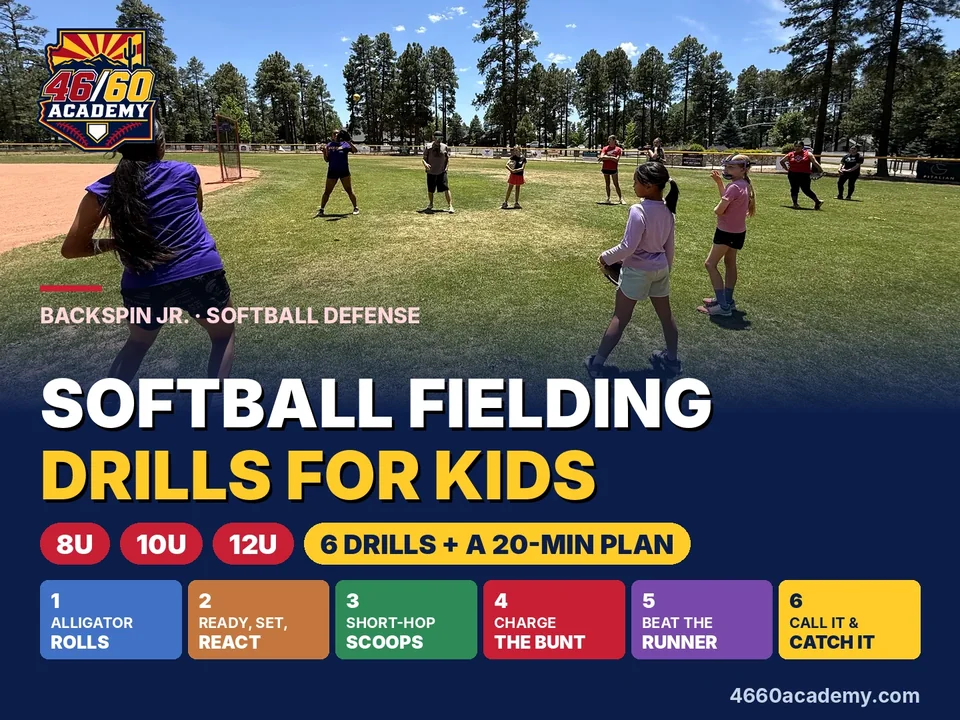
Softball moves fast. Hitters bunt and slap, infielders play in close, and the ball gets on a young fielder quickly. The good news is that the same few habits win almost every play, and kids can learn them in short, fun sessions in the backyard or at practice.
The best softball fielding drills for kids build a low ready position, glove down early, two hands to the belly and quick feet to throw. Start with soft balls and slow rolls, then add bunts, short hops and pop-ups as the player gets older and more confident.
Train it: Complete Defender (Level 2 Fielding, $49) → Free: Free Fielding Intro Course →What’s different about fielding in softball?
The basics are the same as baseball: get in front, glove down, funnel it in, step and throw. What changes is time. Softball infielders play closer to the hitter, and plays happen quickly, so a young fielder who is ready early has a big advantage.
- Bunts and slappers. Corners and pitchers have to charge, scoop and throw on the run.
- Quick hops. Balls get on infielders fast on a dirt infield, so the glove has to be down early.
- A bigger ball. Two hands matter even more; teach the throwing hand to cover the ball every time.
- Face masks. Many young infielders and pitchers wear a fielder’s mask. Check your league’s rules, and let your player try one if it helps her feel safe.
How do I set up safe softball fielding practice at home?
Confidence comes first. A player who is scared of the ball turns her head, and a turned head drops the ball. Take the sting out before you add speed.
- Ball: start with a soft training softball or a foam ball. Move to a real softball as she gets comfortable.
- Distance: begin about five big steps apart and roll the ball, don’t throw it.
- Surface: flat grass is best. Bumpy ground creates bad hops.
- Time: 10 to 15 minutes is plenty. Stop while it’s still fun.
Our free Fielding Intro Course uses this same setup: seven short lessons that start with slow, stationary rolls and build from there.
Six softball fielding drills for kids
- Alligator rolls (8U and up): Roll slow grounders. The glove is the bottom jaw, open and on the ground in front of the feet; the throwing hand is the top jaw that snaps down to cover the ball. 10 rolls, then switch.
- Ready, set, react: Player starts in a low ready position, feet wider than shoulders. Point left or right, then roll the ball that way. She shuffles to get in front of it, not reach for it. Great for quick feet.
- Short-hop scoops: From five steps away, bounce soft balls so they land just in front of her glove. Keep the glove low and let it ‘give’ back toward the belly. Short hops scare kids less once they catch a few.
- Charge the bunt (10U and up): Roll a slow ball like a bunt. She charges, scoops with two hands outside her front foot, and makes a short, firm throw to a target. Count how many clean plays in a row.
- Beat the runner: A sibling or parent runs from ‘home’ to a cone while the fielder fields a roll and throws to a target at the cone. Fast but under control. Kids love racing someone.
- Call it and catch it: Toss soft pop-ups. She yells ‘Ball! Ball! Ball!’ before every catch, two hands up, glove above her eyes. Calling the ball early keeps teammates from colliding.
Do two or three drills per session, not all six. Quality reps beat a long list.
What softball fielding skills to teach at each age
| Age | Focus | Try these drills |
|---|---|---|
| 8U | Ready position, glove down, two hands, eyes on the ball | Alligator rolls, ready-set-react, call it and catch it |
| 10U | Short hops, moving to the ball, accurate throws to a base | Short-hop scoops, charge the bunt, beat the runner |
| 12U | Bunts and slappers, backhands and forehands, quick decisions | All six, with faster rolls and a runner every round |
Ages are a guide, not a rule. Move up when she makes the play cleanly about eight times out of ten, and move back if she starts turning her head.
A 20-minute softball fielding practice
- Warm up (4 minutes): light jog, arm circles and easy short throws. Stop if her arm hurts.
- Glove work (6 minutes): alligator rolls and short-hop scoops.
- Moving work (6 minutes): ready-set-react and charge the bunt.
- Game (4 minutes): beat the runner, keep score and end on a win.
If you want a full plan that builds week by week, Complete Defender is our Level 2 fielding program: 16 parent- or coach-guided sessions over four weeks for ages 7–12, baseball and softball, $49, and Lesson 1 is free.
One thing to remember
Ready early, glove down, two hands and quick feet: softball plays are fast, so the player who is ready first wins.
What to do this week
Do three 15-minute sessions with a soft ball. Session one is alligator rolls and short hops, session two adds ready-set-react, and session three adds charge the bunt and a round of beat the runner.
Parent questions
How do I teach my daughter not to be scared of ground balls?
Use a softer ball, roll it slower and from closer, and praise eyes on the ball more than clean catches. Many young infielders also feel safer in a fielder's mask; check your league's rules.
Should young softball players field with one hand or two?
Two hands. The glove is down and open, and the throwing hand covers the ball as it goes in. One-handed plays come later, once the basics are automatic.
How often should my child practice fielding?
Short and often beats long and rare. Three 10- to 15-minute sessions a week is plenty for most 8U to 12U players, especially in season.