Evaluation, like a game, tryout or showcase, shows where a player is right now; development is the practice that changes it. Players 7 to 12 need far more development than evaluation. Tryout season fills the calendar fast with winter leagues, showcases and evaluation days, and it's easy to feel like more events means more progress. For young players, it usually doesn't work that way.
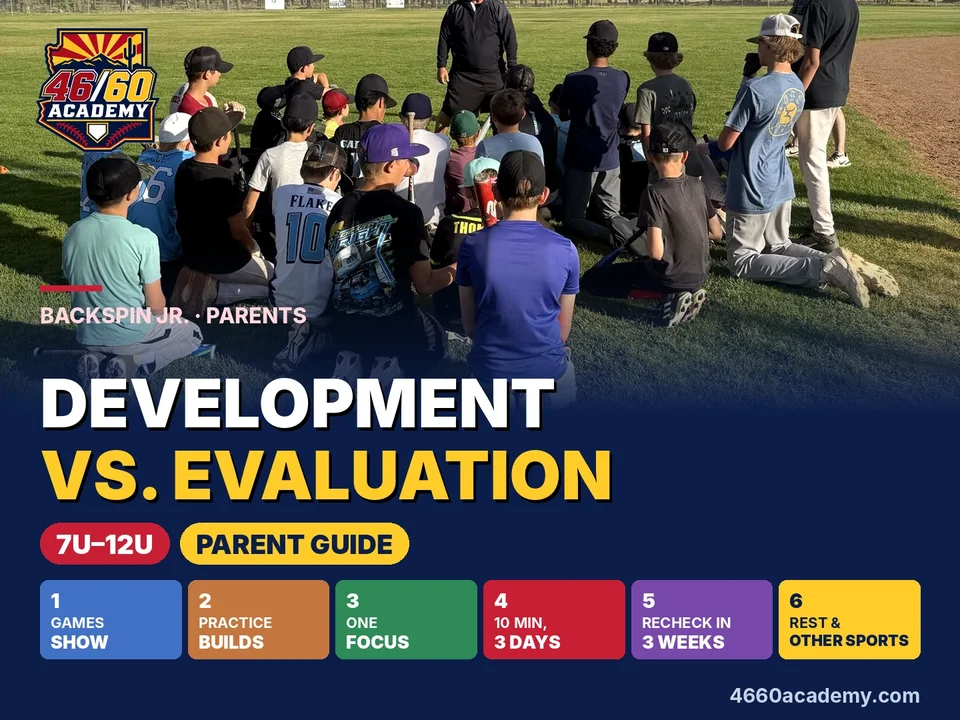
Evaluation is a game, tryout or showcase that shows where a player is right now. Development is the practice that changes it: one clear focus, short frequent reps with feedback, and a recheck a few weeks later. Kids 7–12 need far more development than evaluation.
Train it: Level 2 Skill Builder programs → Free: Free starting-point check →What's the difference between development and evaluation?
Evaluation answers one question: how good is this player today? Tryouts, showcases, all-star selections and most tournament weekends are evaluation. A coach watches, compares and decides.
Development answers a different question: what will make this player better next month? It happens in practice, in the backyard and in short sessions where a child gets many reps, a little feedback and room to make mistakes.
Both have a place. The problem is the ratio. USA Baseball's long-term development plan names the imbalance between competition and development as one of the big challenges in youth baseball, along with year-round play and early single-sport specialization.
Why don't more games always mean getting better?
Think about how many swings a 9-year-old gets in a game. A few at-bats, maybe a dozen pitches seen. In the field, they might touch the ball two or three times. That's great for learning the game, but it's a small number of reps.
- Few reps: a 10-minute backyard session can give more throws, catches and swings than a full game.
- Little feedback: in a game, nobody stops to fix a step or a glove angle.
- High pressure: kids tend to play it safe in front of a crowd, so they don't try the new thing.
- Arm and body load: stacked games mean more throwing and less rest. Follow your league's pitch-count and rest rules, and stop if anything hurts.
USA Baseball made the same point this fall when it announced a bigger development pathway for ages 10U to 17U, starting in 2027. Its announcement said youth baseball often puts evaluating young athletes ahead of developing them. You don't need a national program to act on that. You need a plan at home.
What does development look like for a 7- to 12-year-old?
The pattern that works is simple, and it's the same one good coaches use at every level:
- Find one focus: not five things. One. Our free starting-point check asks six quick questions and points to the one skill to start with.
- Practice it short and often: about 10 minutes, three or four days a week, beats one long Saturday session.
- Give one cue: a few words the child can remember, like "glove out front" or "step to the target."
- Recheck in two to four weeks: run the same check or the same little game again. If it's better, pick the next focus.
Coach BK puts the attitude part this way: "Two choices: A. Do everything in your control. B. Anything but A." For a young player, that means showing up to the 10 minutes with effort, whether or not anyone is keeping score.
How do I plan the offseason without overloading my kid?
Winter is the best development window of the year, because nobody is chasing a standings page. A healthy week for most 7–12 year olds looks something like this:
| Day | What it looks like |
|---|---|
| 2–3 days | 10 minutes on the one focus skill, at home or at the park |
| 1–2 days | Another sport or free play: running, jumping, climbing |
| 1 day | A team practice, lesson or camp if you have one |
| Rest days | No throwing. Kids need them, especially in winter |
Keep it fun and short. If your child stops wanting to go outside, cut the time, not the joy. And keep other sports in the mix. USA Baseball's plan specifically favors waiting on single-sport specialization.
Should my kid skip tryouts and showcases, then?
No. Tryouts and games are part of the fun, and kids learn a lot from competing. The goal is balance, not avoidance.
- Before a tryout: spend the weeks ahead on one or two skills, not on cramming everything.
- After a tryout: whatever the result, ask "What's one thing you want to get better at?" That turns an evaluation into a plan.
- During a busy season: keep one short at-home session a week, even when games pile up.
If you want that plan laid out for you, our Level 2 Skill Builder programs are 16-session, parent-guided plans for ages 7–12 in the $25/month 46/60 membership. Each one keeps the same pattern: one focus, short reps, recheck.
One thing to remember
Games and tryouts show where a player is; short, steady practice is what moves them forward.
What to do this week
Take the free starting-point check with your child and pick one focus. Practice it for 10 minutes on three days, then run the check again in three weeks.
Parent questions
How many games should a 10-year-old play in a year?
There's no single number, and league schedules vary. A good sign is that your child gets more practice reps than game reps, has real rest days, and plays other sports during the year.
Do showcases help kids under 12 get better?
Showcases mostly evaluate. They can be fun experiences, but the skill growth comes from the practice before and after them.
What's the best offseason plan for a young baseball player?
Pick one skill to work on, practice it about 10 minutes a few days a week, keep playing other sports, take rest days from throwing, and recheck progress every few weeks.
SEE LEVEL 2 SKILL BUILDER PROGRAMS →
Sources: USA Baseball: USA Baseball to Expand National Team Development Program (Oct. 22, 2026) · USA Baseball: Long-Term Athlete Development Plan