
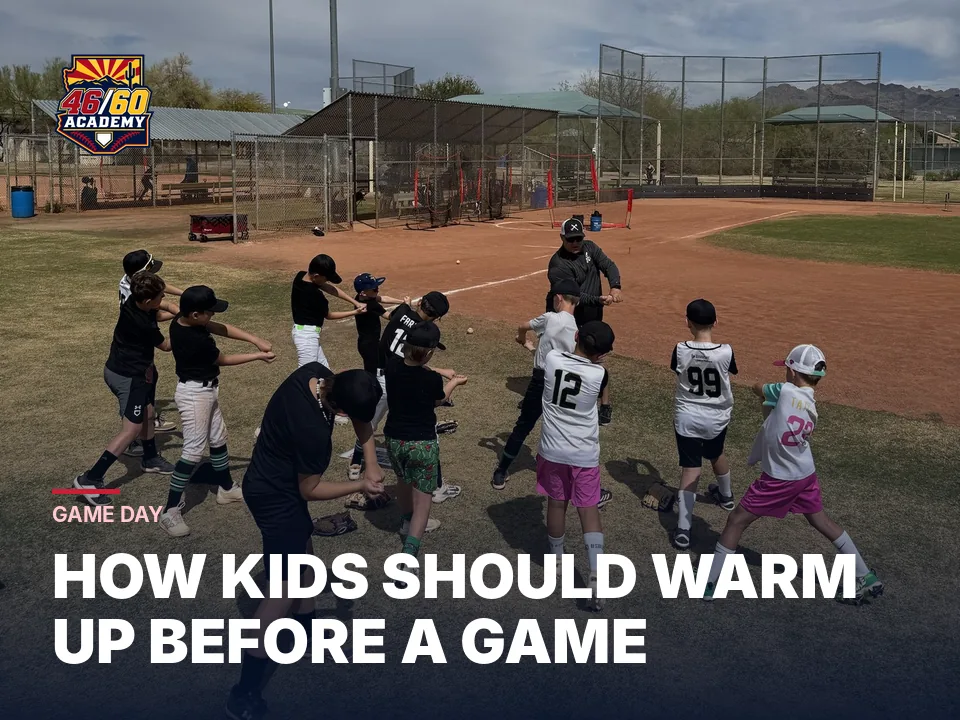
Most young players show up to the field, grab a ball and start firing it. That cold first throw is the one we want to skip. A short warm-up, done the same way every game, gets the body ready and calms the nerves too.
Kids should warm up for at least 10 minutes before a game: easy jogging, then dynamic movements like skips and lunges, then throwing that starts short and soft and builds to longer and harder. Move the body before the arm ever throws.
Train it: Game-Speed Athlete (Level 2 Speed & Agility, $49) → Free: Free Speed & Agility Intro Course →Why warm up before a youth game?
A warm-up raises body temperature and wakes up the muscles kids are about to use: legs for running, hips for swinging, shoulders for throwing. The American Orthopaedic Society for Sports Medicine recommends warming up at least 10 minutes, starting with jogging, dynamic movements and stretching.
It also helps the head. A routine tells a nervous 8-year-old, "This is what we do. You're ready." As Coach BK tells every player, it's a great day to hit!! A good warm-up helps them feel it.
Keep it light. A warm-up is not a workout. Kids should finish it loose and smiling, not tired.
A simple 10–15 minute pregame warm-up
Do these in order, in a line from one cone to another, about 15 to 20 steps apart. Walk back between each one.
| Minutes | What to do | Look for |
|---|---|---|
| 0–2 | Easy jog, two trips | Relaxed, talking pace |
| 2–4 | Skips, then high skips | Arms swinging, light feet |
| 4–6 | Side shuffles both ways, then carioca | Stay low, no crossing feet on the shuffle |
| 6–8 | Walking lunges with a twist, then walking knee hugs | Tall chest, good balance |
| 8–10 | Arm circles small to big, both directions | Slow and smooth |
| 10–12 | Two short build-up runs to about three-quarter speed | Smooth, not all-out |
| 12–15 | Throwing warm-up (next section) | Short and soft first |
Save long, held stretches for after the game. Before the game, keep the body moving.
Coaches with a full team can run this as one group in a line. Parents can do the same thing in the parking lot or backyard before leaving home.
How should kids warm up their arm?
Only after the body is warm. Then go short to long, soft to firm. AOSSM advises starting with short, low-speed tosses before working up to longer, faster throws.
- Knee throws: partners close together, on one knee, easy tosses to the chest.
- Short and easy: stand up, a few steps apart, soft throws with good footwork.
- Back up a little: take a few steps back every handful of throws.
- Firm, not max: finish with a few firm throws at a normal game distance.
- Quick feet to finish: a few catch-and-throws with quick feet, still under control.
What to look for: a calm arm, good aim and no wincing. If a player says the arm hurts, stop throwing for the day and tell the coach. Young players should never throw with pain.
Pitchers usually have their own warm-up and their own limits. Follow your league's pitch-count and rest rules, and check your league's rules for pregame warm-up pitches.
Warming up in the Arizona heat
Here in Arizona, the warm-up starts before you leave the house. On a hot afternoon, a long warm-up in full sun can drain a kid before the first pitch.
- Shade first: do the movement part in the shade if there is any.
- Water breaks: more than you think. Bring a full water bottle with your name on it.
- Shorter is fine: on very hot days, keep the warm-up to the short end and skip extra running.
- Light clothes: hats, light colors, and change into the jersey at the field if it helps.
- Know the warning signs: stop right away for dizziness, headache, nausea, cramps, confusion or unusual tiredness. Confusion, fainting or very hot skin can be heat stroke. Call 911.
Ask your pediatrician what is right for your child in the heat, especially if they have a health condition.
Make it a routine kids own
The best warm-up is the same one every time. By midseason, kids should be able to run it themselves while the coach sets up.
- Let a player lead: rotate a warm-up captain each game who calls out the next move.
- Make it a game: last skip of the day is a race to the cone, then walk back.
- Add a swing: finish with a few dry swings, nice and controlled, with plenty of space around them.
The free Speed & Agility Intro Course teaches many of these moves in seven short lessons. When your player is ready for more, Game-Speed Athlete ($49) is our 16-session Level 2 program on running form, first steps and quick, athletic feet.
One thing to remember
Move the body first, then throw short to long, and never throw with pain.
What to do this week
Before your next game or practice, walk your player through the 10–15 minute routine at home once. At the field, let them lead it, and watch for short, soft first throws.
Parent questions
Should kids stretch before baseball?
Moving stretches like skips, lunges and arm circles are best before playing. Save long, held stretches for after the game.
How long should a youth baseball warm-up be?
Sports medicine guidance recommends at least 10 minutes. For most players ages 7–12, a 10–15 minute routine of movement, then throwing, is plenty.
What if my child's arm hurts during warm-ups?
Stop throwing for the day and tell the coach. If the pain keeps coming back, see your pediatrician.
SEE GAME-SPEED ATHLETE (LEVEL 2 SPEED & AGILITY, $49) →
Sources: AOSSM: Baseball Injuries (arm care and warm-up tips)