
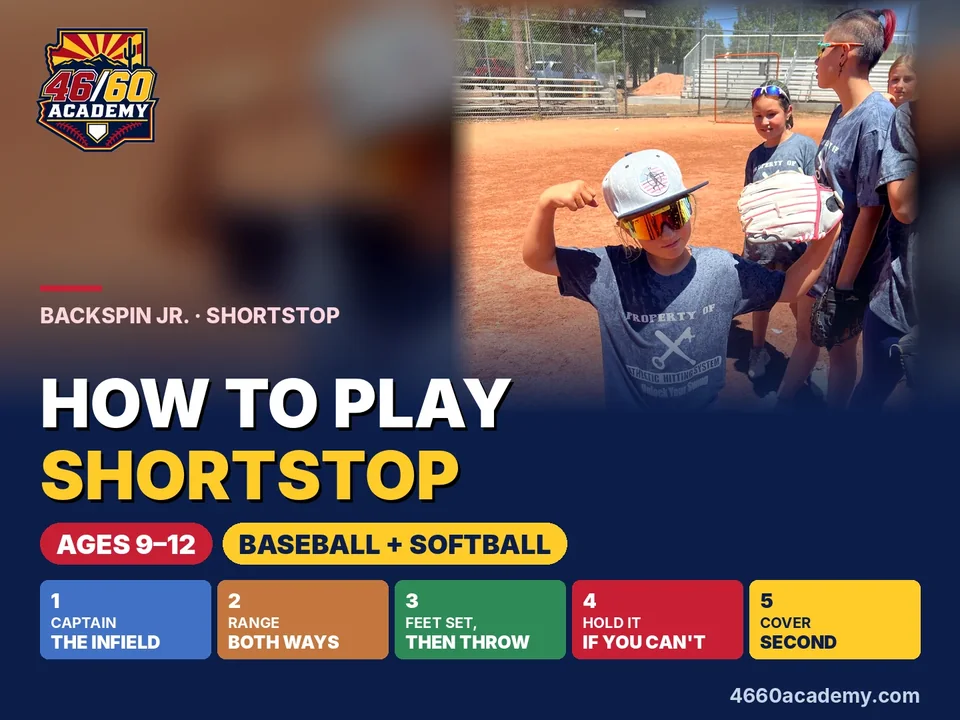
To play shortstop, a kid stands between second and third, gets ready on every pitch and knows the play before it happens. Shortstops field the left side, cover second, go out for outfield throws and lead the infield with their voice. It's the spot a lot of 9- to 12-year-olds want to play, and here's how to help your child grow into it in baseball or softball.
To play shortstop, a kid stands between second and third base, gets ready on every pitch and knows the play before it happens. The shortstop fields grounders and pop-ups on the left side, covers second base on many plays, takes throws from the outfield and leads the infield with their voice.
Train it: Complete Defender (Level 2 Fielding) → Free: Free Fielding Skill Guide →Where does a shortstop stand?
The shortstop plays between second base and third base. For kids, a good starting spot is a few steps behind the baseline between the bases, deep enough to get to balls on both sides but close enough to make the throw to first. If the throw keeps bouncing or falling short, move in a few steps. Getting the out matters more than looking like a big leaguer.
The coach may move your shortstop for different hitters or situations. Teach your player to check their spot before every pitch.
What does a shortstop do on each play?
MLB calls the shortstop the captain of the infield. Here are the main jobs, kid-sized:
- Field the left side: grounders and pop-ups between second and third. On a pop-up both players can reach, the shortstop usually calls it and the third baseman lets it go.
- Make the long throw: the throw to first is the longest in the infield. Field it, set the feet, point the front shoulder at first and throw through the target.
- Cover second base: on balls hit to the right side, the shortstop often runs to second to catch the throw for a force out.
- Go out for outfield throws: on balls to left field or left-center, the shortstop often goes out to be the target for the outfielder, then turns and throws it in.
- Talk: call pop-ups, remind everyone of the outs and tell the second baseman who's covering second.
Who covers which base changes by team and age group, so ask your coach how your team does it.
When should a young shortstop not throw?
This is the most useful thing you can teach. Shortstops get balls deep in the hole, way to their right, and the throw from there is a long one. For a 9- or 10-year-old, a rushed throw from deep in the hole often ends up past first base, and the batter takes an extra base.
Teach a simple rule: if you can't set your feet, hold the ball. A ball knocked down and held is a single. A wild throw can turn it into a double or worse. As your player gets stronger and more confident, they'll make more of those throws. Until then, smart beats fancy.
On a ball they can't catch cleanly, knock it down and keep it in front. A shortstop who blocks the ball and picks it up still has a chance at the out.
What shortstop drills can kids do at home or practice?
Use a soft ball or a safety ball, especially indoors. Warm the arm up first, keep the long throws to a small number and stop if anything hurts.
- Side-to-side rolls (5 minutes): roll grounders to the left, right and straight at your player from 15 to 20 feet. They shuffle, get in front and field with two hands. Mix in a few they have to reach for.
- Feet first, then throw (5 minutes): after each fielded roll, your player says "set" as their feet line up toward the target, then throws to you or a net. Only a handful of full-length throws per session.
- Hold or throw? (5 minutes): roll some balls far to their right. If they can set their feet, they throw. If not, they hold it up and yell "Hold!" Praise the smart holds as much as the good throws.
- Captain call-outs (3 minutes): before each rep, your player calls out the outs and where the ball is going. That habit is half of playing shortstop.
Is shortstop different in softball?
The jobs are the same: lead the infield, call plays, cover bases and handle throws from the outfield. The field is smaller, so plays happen faster and slappers and bunters can make the shortstop charge more. Quick feet and a quick release matter even more.
In both sports, attitude is part of the position. Coach BK likes to say "It's a great day to be you!!" For a young shortstop, that means showing up loud and ready, wanting the ball hit to you, and shaking off an error before the next pitch. Rotate positions while kids are young too. A future shortstop learns a lot from playing second, third and the outfield.
One thing to remember
A shortstop wins with the brain and the voice first: know the play, call it out, and only throw when the feet are set.
What to do this week
Do the side-to-side rolls and the hold-or-throw game twice this week for 10 to 15 minutes. Keep the long throws to a small handful and cheer every smart hold.
Parent questions
What makes a good youth shortstop?
Quick feet, sure hands, a dependable arm and a player who loves to talk on the field. Being the best athlete helps, but knowing the play before it happens matters just as much.
Is my kid too young to play shortstop?
Not if they enjoy it and can field and throw routine grounders. Many young players play some shortstop and some other spots. Moving around helps them learn the whole field.
Should my shortstop throw sidearm?
Most throws should be overhand with the feet set. Older players sometimes use a lower arm angle on quick plays, but young players should master the basic overhand throw first. Ask your coach before changing how your child throws.
SEE COMPLETE DEFENDER (LEVEL 2 FIELDING) →
Sources: MLB.com Glossary — Shortstop · Little League University — Infield Drill Progression (content provided by USA Baseball) · MOJO Sports — Softball Positions Explained